

How High Should Wall Sconces Be? A Complete Room-by-Room Guide
Quick answer: for general wall lighting, a useful starting point is to mount the centre of a wall sconce about 60–72 inches (152–183 cm) above the finished floor. In many standard-height rooms, 60–66 inches (152–168 cm) works well. Bedside, bathroom, hallway and staircase sconces should then be adjusted for the person using the light, the fixture's size and projection, and the object or architecture it sits beside.
If you're wondering how high wall sconces should be, there isn't one measurement that works in every room. A bedside reading light needs to work from a seated position, bathroom sconces should relate to the mirror and face height, and staircase lights need consistent placement without creating glare or reducing clearance.
This wall sconce height guide covers the most useful starting measurements for bedrooms, bathrooms, hallways, living rooms and stairs, plus spacing, hardwired vs plug-in options and real wall sconces for different placements.
Wall Sconce Height Chart by Room
Use these measurements as planning ranges rather than fixed rules. Unless noted otherwise, measure from the finished floor to the centre of the fixture or backplate.
| Location | Starting Height | Spacing / Alignment | What to Check |
|---|---|---|---|
| General wall lighting | 60–72 in (152–183 cm) to fixture centre | Keep repeated fixtures visually level | Ceiling height, fixture body, glare and projection |
| Hallway | About 60–72 in (152–183 cm) to centre | Often 6–10 ft (183–305 cm) apart, depending on output and wall length | Doors, artwork, traffic path and how far the sconce projects |
| Bedside reading | Often around 60 in (152 cm) to centre, then adjust to the seated user | Place so the light falls over the shoulder and the switch is easy to reach | Mattress height, headboard, pillow position, glare and arm reach |
| Bathroom — beside mirror | About 60–65 in (152–165 cm) to centre/backplate | One sconce on each side of the mirror where space allows | Face height, mirror edges, fixture length and damp-location suitability |
| Bathroom — above mirror | Often around 75–80 in (191–203 cm) from floor, adjusted to mirror height | Centre the light over the mirror/vanity | Do not let the fitting feel cramped against the ceiling or overlap the mirror awkwardly |
| Staircase | Use a consistent visual height relative to the relevant tread; around eye level is a useful starting point | Follow the rise of the staircase rather than one fixed floor datum | Projection, glare from above/below, handrail position and walking clearance |
| Living room / artwork | Usually within the 60–72 in (152–183 cm) general range | Align to the artwork, fireplace, console or architectural feature | Seated sightlines, scale, symmetry and visible bulbs |
Swipe sideways to view the full table.
How to Measure Wall Sconce Height Correctly
When a guide gives a wall sconce height from the floor, it usually means the distance from the finished floor to the centre of the fixture or mounting backplate — not to the top or bottom of the shade. For an asymmetrical, extra-tall or adjustable wall light, the mounting point can sit far from the visual centre, so always check the product drawing before fixing the electrical box.
A simple way to test placement before installation is to mark the fixture's full height and width on the wall with painter's tape. Then view it while standing, sitting or lying in the position from which the light will actually be used. This catches problems with scale, glare, furniture clearance and switch reach before the fixture is permanently installed.
How High Should Bedside Wall Sconces Be?
For bedside wall sconces, seated comfort matters more than a universal floor measurement. Around 60 inches (152 cm) from the floor to the fixture centre is a useful first mock-up for many beds, but mattress thickness, headboard height and the reader's height can shift the ideal position noticeably.
Sit upright in bed as you normally would. The light source should sit around or slightly above shoulder level so light reaches the page without shining directly into your eyes. If the sconce has a built-in switch or adjustable arm, make sure it can be reached comfortably without stretching.
For bedroom-specific options, browse our interior wall lighting collection.
How High Should Bathroom Wall Sconces Be?
Beside a Bathroom Mirror
When sconces flank a bathroom mirror, start around 60–65 inches (152–165 cm) from the finished floor to the centre of the fixture or backplate. The goal is to place light close to face level so it illuminates from the sides rather than creating strong shadows from overhead.
Do not force a fixed distance between the sconces. Let the mirror width, vanity size and fixture body determine their horizontal position. Keep both lights symmetrical and check that the shades do not overlap the mirror, door trim or adjacent cabinetry.
Above a Bathroom Mirror
If there is not enough room beside the mirror, an above-mirror light can work well. A common starting range is around 75–80 inches (191–203 cm) above the floor, but the final position should follow the height of the mirror and ceiling. For a horizontal bath light, keep the fitting visually centred over the vanity and within the mirror's width where possible.
Always check that a bathroom fixture is suitable for the intended location and moisture exposure. You can browse dedicated bathroom wall and vanity lights rather than assuming every decorative wall sconce is appropriate for a bathroom.
Wall Sconce Height and Spacing in a Hallway
For hallway sconces, start in the general 60–72 inch (152–183 cm) height range. In a standard-height hallway, keeping the fixture near eye level usually creates a balanced result without making the light feel disconnected from the wall.
For spacing, there is no single number that suits every fitting. A practical planning range is roughly 6–10 feet (183–305 cm) between sconces. Smaller or lower-output fixtures may need closer spacing, while larger or brighter wall lights can often sit further apart. Doors, artwork and wall panelling may matter more than achieving a mathematically exact interval.
In narrow hallways, also check fixture projection. A deep arm or shade can intrude into the walking path even when its height looks correct.
How High Should Wall Sconces Be on a Staircase?
Staircase sconces should follow the rise of the stairs. Instead of measuring every fitting from the ground floor, use a consistent relationship to the nearby tread or stair nosing so the fixtures form a clean rising line.
Around eye level is a useful visual starting point, but safety comes first: check how far each fitting projects from the wall, whether a person can see directly into an exposed bulb when looking up or down the stairs, and whether the fixture interferes with the handrail or movement of people and furniture.
Low-profile, enclosed or diffused wall lights generally make staircase placement easier because they reduce glare and physical projection into the stair path.
Living Room Sconces Beside Art, Fireplaces and Consoles
Living-room sconces are often placed within the same 60–72 inch (152–183 cm) general range, but the surrounding object should drive the final alignment. When sconces flank artwork, a fireplace or console, centre the pair on that feature rather than on the entire wall.
Large vertical sconces can sit differently from small decorative fittings, so mock up the full fixture outline before installation. From a sofa or armchair, check that an exposed bulb or intense LED source does not sit directly in the seated sightline.
Hardwired vs Plug-In Wall Sconces
Hardwired wall sconces connect directly to the home's electrical wiring and give the cleanest permanent appearance because there is no visible power cord. Installation requirements vary by location, so fixed wiring should be completed by an appropriately licensed or qualified electrician where required by local rules.
Plug-in wall sconces mount to the wall but connect to a nearby power outlet. They can be useful for renters, bedside reading or spaces where you do not want to relocate electrical wiring. Before mounting one, plan where the cord will run and make sure the switch and plug remain easy to access.
What Else Changes the Ideal Sconce Height?
- Fixture height: a 100 cm sculptural light needs a different mounting point from a compact globe sconce.
- Projection: deep shades and swing arms need more clearance in hallways and staircases.
- Light direction: upward, downward and exposed-bulb sconces create different glare and shadow patterns.
- User height: eye level and seated shoulder height vary, especially for bedside and vanity lighting.
- Furniture and architecture: headboards, mirrors, mantels, artwork, doors and panelling should influence final alignment.
- Room conditions: bathrooms and outdoor areas may require fixtures rated for moisture or weather exposure.
Wall Sconces for Different Placements
These Lumix wall lights illustrate how fixture type changes placement. Always check the product specifications before choosing the final junction-box or mounting height.
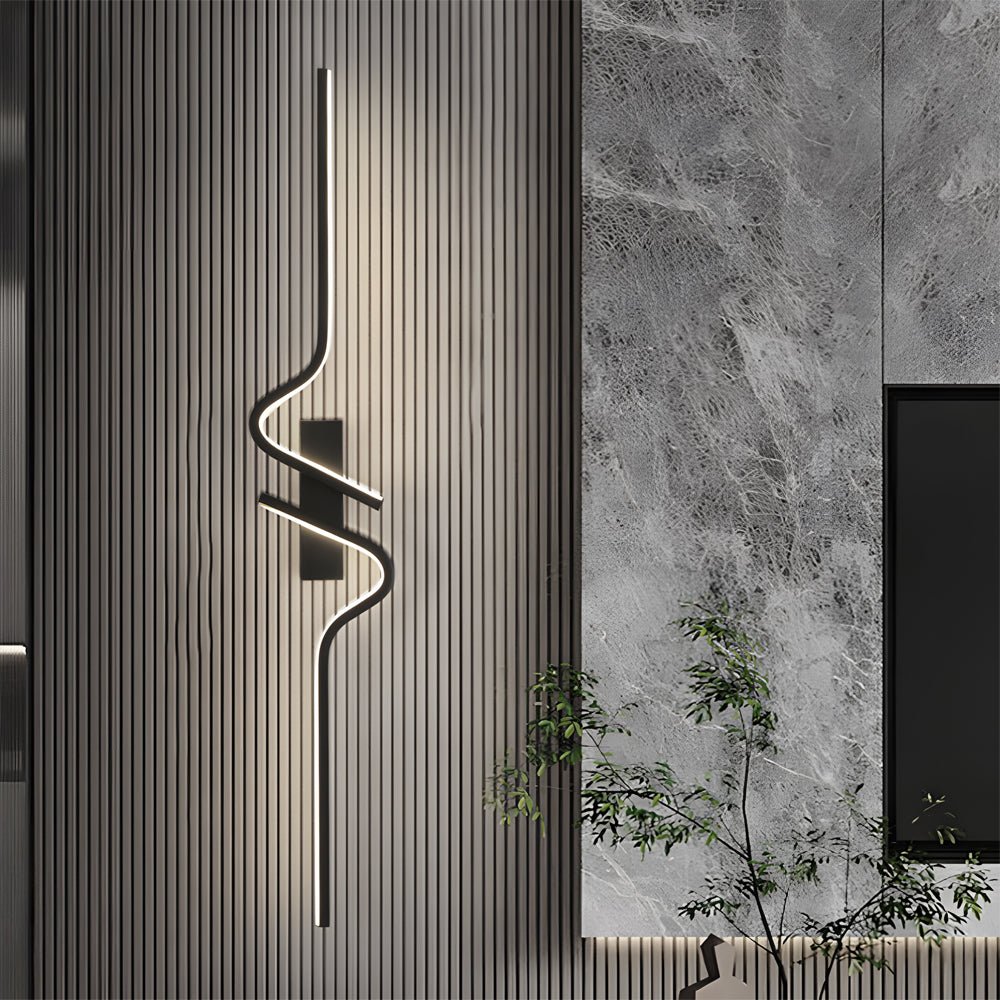
For Hallways & Feature Walls: Modern Curved LED Wall Sconce
This sculptural aluminium wall light is available in several tall sizes, making it useful where you want the wall fitting itself to become part of the design. Because the body is much taller than a compact sconce, plan the junction-box position from the exact size you choose rather than relying only on a generic eye-level measurement.
View the curved wall sconce →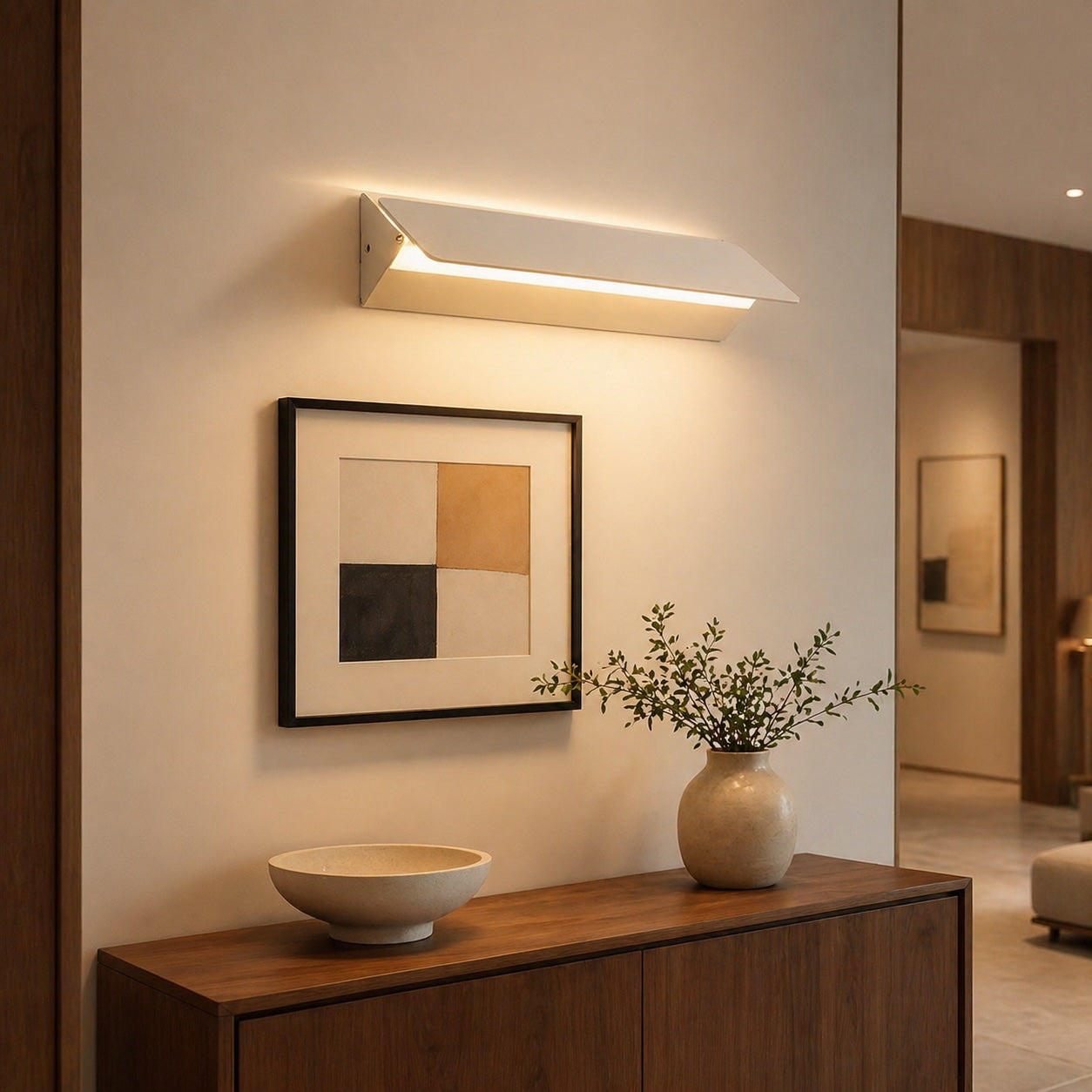
For Bedside Reading: Adjustable Wall-Mounted LED Light
The adjustable head lets you direct light toward a book or reading area rather than flooding the entire wall. That makes the seated position, beam direction and reach more important than hitting one exact floor-to-centre measurement.
View the adjustable bedside wall light →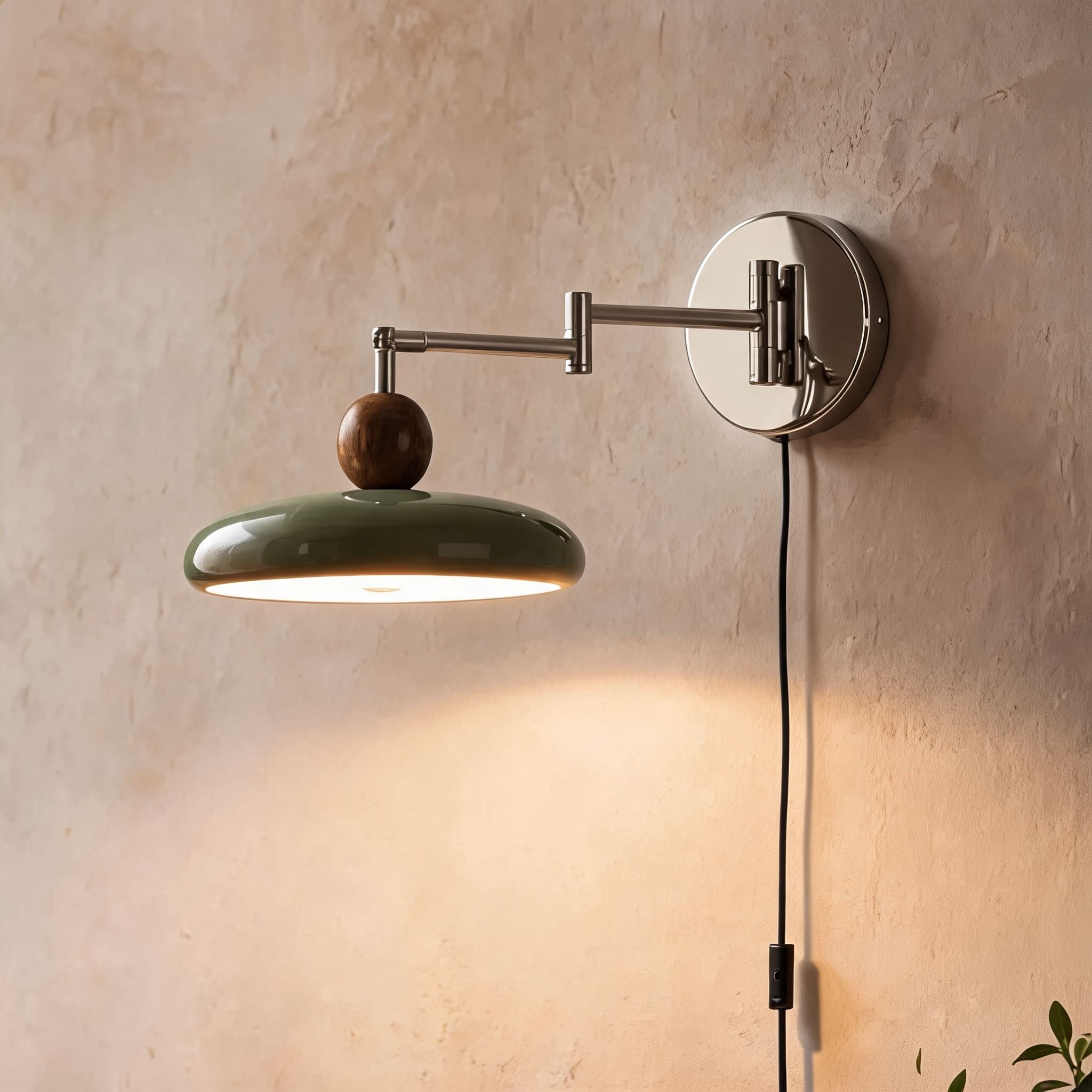
For Renters & Reading Nooks: Plug-In Adjustable Arm Sconce
This wall-mounted lamp plugs into a standard outlet and has an adjustable arm, so it is easier to position around an existing bedside table or reading chair without relocating hardwired electrical points. Plan the cord route and outlet location before fixing it to the wall.
View the plug-in wall sconce →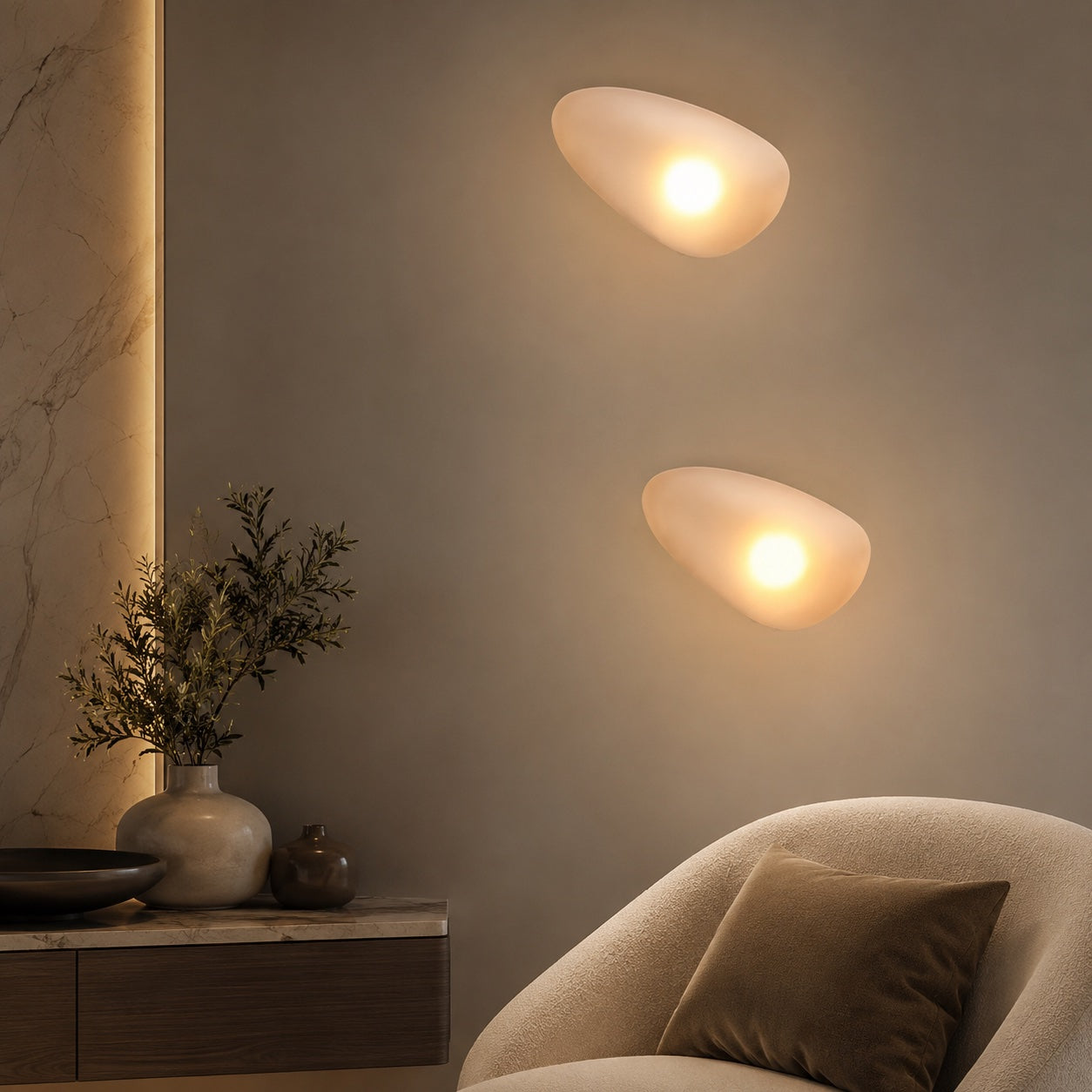
For Living Rooms & Decorative Walls: Pebble Glass Wall Sconce
This hardwired iron-and-glass sconce uses a warm 3000K light and is available in several glass colours. Its decorative form suits living rooms, hallways and feature walls where the fitting is intended to add ambience as well as light.
View the pebble glass wall sconce →Looking for the right wall light? Browse the full Lumix wall sconce collection, or shop bathroom wall and vanity lights for fixtures intended for vanity applications.
Common Wall Sconce Placement Mistakes
- Using one height for every room. A hallway sconce and a bedside reading light serve different purposes and should not automatically share the same mounting height.
- Measuring to the wrong point. Confirm whether the product drawing references the fixture centre, backplate, top edge or electrical box.
- Ignoring fixture projection. Deep sconces can become obstacles in narrow hallways and staircases.
- Placing exposed light sources at eye level. Always test for glare from normal standing and seated positions.
- Centred on the wall, but not the object. Sconces flanking a mirror, bed, fireplace or artwork should relate to that feature first.
- Choosing a bathroom light without checking suitability. Confirm the fixture is appropriate for the intended bathroom location and local requirements.
Frequently Asked Questions About Wall Sconce Height
What is the standard wall sconce height from the floor?
A useful general starting range is 60–72 inches (152–183 cm) from the finished floor to the centre of the fixture. In many standard rooms, 60–66 inches (152–168 cm) works well. The final height should still be adjusted for fixture size, room function and sightlines.
How high should bedside wall sconces be?
Start around 60 inches (152 cm) to the fixture centre, then adjust to the person using the bed. Sit upright and place the light around or slightly above shoulder level so it illuminates a book without shining directly into your eyes. Also check that the switch or adjustable arm is easy to reach.
How high should bathroom sconces be beside a mirror?
About 60–65 inches (152–165 cm) from the floor to the fixture centre or backplate is a strong starting point. Adjust for the user's face height, mirror size and fixture length, and keep paired sconces symmetrical.
How high should a wall light be above a bathroom mirror?
An above-mirror fixture often lands around 75–80 inches (191–203 cm) above the floor, but mirror and ceiling height should determine the final position. Keep the light centred over the vanity and avoid crowding the ceiling.
How far apart should wall sconces be in a hallway?
Roughly 6–10 feet (183–305 cm) apart is a useful planning range. The best spacing depends on the light output, fixture size, hallway length, doors, artwork and whether you want subtle pools of light or more continuous illumination.
How should wall sconces be positioned on stairs?
Keep them at a consistent visual height relative to the nearby stair tread or nosing so they rise with the staircase. Check projection, handrail clearance and glare from both the top and bottom of the stairs before finalising the positions.
Can I install a wall sconce without hardwiring?
Yes. A plug-in wall sconce mounts to the wall but connects to a nearby power outlet. It can be a practical option for renters, bedrooms and reading nooks where you do not want to add or move permanent wiring.
Do wall sconces need to match ceiling lights?
No. They should feel coordinated rather than identical. Repeating one or two elements — such as finish, material, shape, colour temperature or overall design language — is usually enough to make wall and ceiling lights feel intentional together.
Final tip: treat every wall sconce height as a starting point, then test the exact fixture at full scale before installation. The best placement is the one that looks balanced, puts the light where you need it and avoids glare or physical obstruction.