

Outdoor Hanging Lights: How to Choose the Right Light for a Porch, Patio or Pergola
Quick answer: choose an outdoor hanging light based first on how exposed the installation area is, then on size, material and style. A sheltered porch or covered patio may suit a splash-resistant outdoor fixture, while a more exposed location generally calls for a higher level of weather protection. Always check the specific fixture's IP rating, installation instructions and suitability for your location before installation.
Outdoor hanging lights can transform a porch, patio or pergola, but choosing one is slightly different from choosing an indoor pendant. Outside, the fixture has to deal with moisture, dust, temperature changes and sometimes direct exposure to rain.
That means the first question should not be simply "Which pendant looks best?" It should be "Is this fixture suitable for the exact place I want to install it?"
This guide explains outdoor IP ratings, how to choose the right size and hanging height, which materials to consider and several options from the Lumix outdoor hanging light collection for different exterior spaces.
What to Check Before Buying an Outdoor Hanging Light
Outdoor pendant lights are not interchangeable. Two fixtures that look almost identical may be designed for very different levels of weather exposure.
Before choosing a design, check these five things:
- Weather exposure: decide whether the fixture will be completely sheltered, partially exposed or regularly hit by rain.
- IP rating: check the manufacturer's stated protection against solids, dust and water.
- Material and finish: exterior conditions can affect metals and coatings differently, particularly in humid or coastal environments.
- Total hanging height: measure the full distance from the ceiling or mounting point to the lowest part of the fixture.
- Power source: most permanent outdoor pendants are hardwired, while some decorative exterior lights use solar power.
Outdoor Lighting IP Ratings Explained
An IP rating describes the level of protection an enclosure provides against solid particles and water.
The first digit relates to solids and dust. The second relates to water. Higher numbers generally indicate greater protection within each category, but the rating still needs to be interpreted in relation to the actual installation.
| Rating | General Protection | Typical Planning Use |
|---|---|---|
| IP44 | Protected against solid objects larger than approximately 1 mm and splashing water from different directions | Often considered for sheltered exterior areas where exposure is limited, subject to the manufacturer's installation guidance |
| IP54 | Dust-protected and protected against splashing water | Commonly seen on outdoor fixtures intended for sheltered or partially protected areas |
| IP65 | Dust-tight and protected against water jets | Provides greater weather protection for more exposed exterior applications, subject to product instructions |
Swipe sideways to view the full IP-rating table.
Covered Porch vs Exposed Patio: What Changes?
Covered Porch or Veranda
A fixture mounted beneath a substantial roof or deep eave may be protected from most direct rainfall, which gives you more flexibility than a fitting mounted completely in the open.
However, sheltered does not mean indoor. Wind-driven rain, humidity, condensation and dust can still reach the fixture, so it should still be explicitly suitable for outdoor use.
Covered Patio or Pergola
The amount of protection varies enormously. A solid-roof patio may behave much like a covered veranda, while an open-slat pergola may expose the pendant to considerably more rain.
Judge the rating requirement from the actual amount of exposure, not simply the name of the structure.
Open or Exposed Exterior Area
Where rain can directly reach the fixture, weather protection becomes much more important. Look carefully at the stated IP rating and any limitations in the installation instructions before buying.
What Size Outdoor Hanging Light Do You Need?
Outdoor pendants should feel proportional to both the architecture and the area beneath them. A small light can disappear beneath a wide veranda, while an oversized lantern may make a compact porch feel crowded.
For an Outdoor Dining Table
Treat the pendant much like a dining-room fixture. It should feel visually related to the table while remaining comfortably inside its edges.
For one round or compact pendant, use the table width as a guide. For a long outdoor table, a wider fixture or a row of matching pendants can create better balance.
For a Front Porch
Consider the width of the entry, door and ceiling area together. The fixture should be large enough to register from the street without obstructing the doorway or dominating the entry.
For a Large Veranda
Large covered spaces may benefit from several smaller pendants rather than one extremely large fixture, especially where the veranda contains different seating or dining zones.
How High Should an Outdoor Pendant Light Hang?
Hanging height depends on what sits below the light.
Above an Outdoor Dining Table
Around 30–36 inches (76–91 cm) from the tabletop to the bottom of the fixture is a useful starting range. Adjust for fixture size, ceiling height and whether the light blocks sightlines across the table.
Above an Open Walking Area
Head clearance becomes the priority. Make sure the bottom of the pendant is comfortably above normal circulation and cannot be struck by people moving underneath it.
In a Tall Entry or Veranda
Higher ceilings allow a longer drop, but avoid automatically extending the fixture as far as possible. The pendant should still relate visually to the doorway, furniture and surrounding architecture.
Which Materials Work Best Outdoors?
Outdoor lighting commonly uses materials such as aluminium, die-cast aluminium, glass and treated metals because they can be engineered for exterior use.
However, material alone does not determine weather resistance. The quality of the coating, seals, fasteners and electrical enclosure all matter.
- Aluminium: commonly used because it is lightweight and does not rust in the same way as ferrous metals, although finishes can still weather over time.
- Glass: useful for protecting and diffusing the light source while retaining a traditional or architectural look.
- Rattan-style materials: create a softer natural look, but check whether the material is actually intended for the level of exterior exposure in your installation.
- Coated metal: can work well outdoors when the coating and fixture construction are intended for exterior conditions.
Outdoor Hanging Light Ideas
These examples from the Lumix outdoor hanging light collection illustrate several different approaches for porches, patios and pergolas.

For a Clean Contemporary Porch: Aluminium & Glass Pendant
Aluminium and glass create a straightforward architectural look that can work across contemporary porches, patios and covered entryways without dominating the surrounding materials.
The adjustable hanging format also makes this style useful when you want to fine-tune the fixture height to suit a particular ceiling or furniture arrangement.
View the aluminium & glass outdoor pendant → 
For Warm Contemporary Exteriors: Rustic Modern Pendant
A darker metal finish and glass enclosure give this pendant more visual weight than a minimal cylinder while keeping the form simple enough for a contemporary outdoor setting.
It can work particularly well where the exterior already uses darker window frames, timber, stone or other warm architectural materials.
View the rustic modern outdoor pendant → 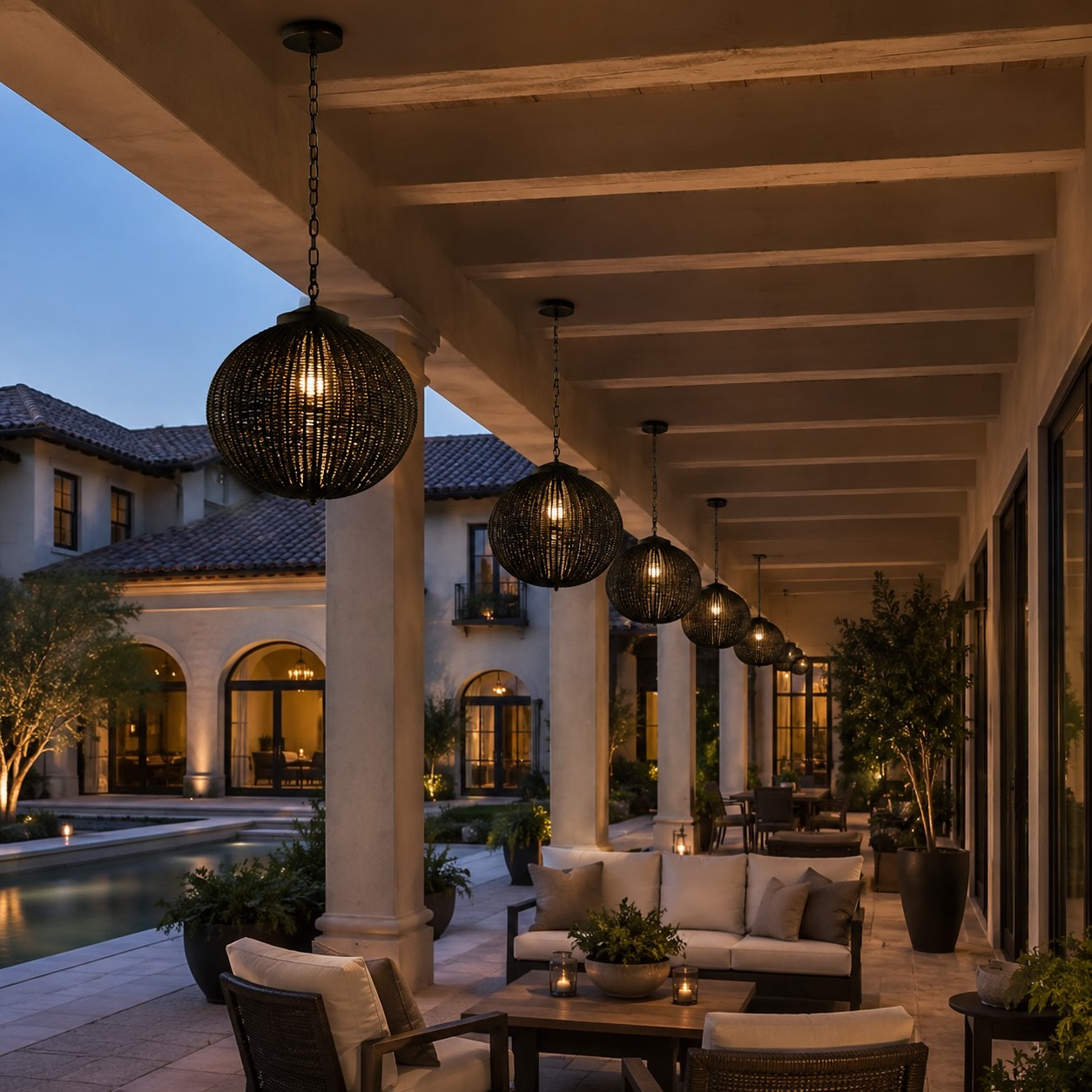
For a Covered Alfresco Area: Rattan-Style Pendant
A woven-look shade introduces texture and a softer residential feel, making this style particularly suited to a covered alfresco dining area or pergola where you want the lighting to feel less architectural and more relaxed.
Because decorative woven materials can have different exposure limits from metal-and-glass fixtures, check the exact product guidance and keep the fitting within an appropriate installation area.
View the rattan-style outdoor pendant → 
For Minimalist Architecture: Modern Exterior Pendant
A compact cylindrical form suits homes where the exterior architecture is already doing most of the visual work. Instead of becoming a decorative focal point, this type of pendant can integrate quietly with modern materials and clean lines.
It is a strong direction for contemporary patios, modern covered walkways and exterior seating areas where you want the light itself to remain visually restrained.
View the modern exterior pendant → 
For a Classic Entryway: Vintage Aluminium & Glass Pendant
A lantern-inspired metal-and-glass fixture can give a front porch or veranda more architectural character than a minimal contemporary pendant.
This style works especially well with traditional, transitional and farmhouse-inspired exteriors where a purely modern cylinder may feel too restrained.
View the vintage outdoor pendant →Looking for an outdoor pendant? Browse the full Lumix outdoor hanging light collection to compare shapes, sizes and exterior styles.
Which Style Works Best for Your Space?
| Outdoor Area | Good Starting Style | What to Prioritise |
|---|---|---|
| Front Porch | Glass lantern or compact architectural pendant | Entry proportions, weather exposure and door clearance |
| Covered Patio | Modern glass, metal or decorative pendant | Dining/seating layout and total hanging height |
| Pergola | Textural or contemporary exterior pendant | How much weather actually passes through the roof structure |
| Outdoor Dining | One larger pendant or several smaller matching pendants | Table size, sightlines and even visual spacing |
| Modern Veranda | Minimal aluminium fixture | Clean proportions and architectural integration |
Swipe sideways to view the full table.
Common Outdoor Hanging Light Mistakes
- Assuming every outdoor light can handle direct rain. Outdoor fixtures have different exposure ratings. Check the specific product rather than relying on the category name.
- Choosing the fixture before assessing the location. Work out how exposed the mounting point is before falling in love with a particular design.
- Ignoring total hanging height. A fixture that looks compact online can hang much lower once its chain, rod or cord is included.
- Using an indoor pendant outside. Indoor fixtures are not automatically designed to handle moisture, condensation or exterior electrical conditions.
- Choosing a fixture that is too small. Exterior spaces are often visually larger than indoor rooms. A tiny pendant can disappear beneath a wide veranda or tall porch.
- Forgetting wind exposure. Long hanging fixtures can move in strong winds. Consider the mounting position, suspension length and manufacturer's installation guidance.
- Ignoring finish maintenance. Exterior finishes are exposed to more dirt, moisture and environmental wear than indoor fixtures and may require periodic cleaning.
Frequently Asked Questions About Outdoor Hanging Lights
What IP rating should an outdoor hanging light have?
It depends on the installation. Sheltered and exposed locations have different requirements. IP44, IP54 and IP65 provide progressively different levels of protection against solids and water, but you should always follow the fixture manufacturer's stated installation guidance and any applicable local requirements.
Can I use an indoor pendant light on a covered porch?
Do not assume that a roof makes an indoor fixture suitable for exterior use. Covered outdoor areas can still experience humidity, condensation, dust and wind-driven moisture. Choose a fixture specifically intended for the installation environment.
Can outdoor pendant lights get wet?
Some outdoor fixtures are designed for greater water exposure than others. The relevant IP rating and manufacturer's instructions should be checked before placing a fixture where rain can reach it directly.
What colour temperature is best for outdoor entertaining areas?
Warm white around 2700–3000K is a popular choice for porches, patios and outdoor dining areas because it creates a softer, more residential atmosphere. Matching nearby wall, landscape and hanging lights can also help the exterior feel more cohesive.
How low should an outdoor pendant hang over a dining table?
Around 30–36 inches (76–91 cm) above the tabletop is a useful starting range. Adjust the final height for the fixture size, ceiling height and sightlines across the table.
How low should an outdoor pendant hang over a walkway?
Maintain comfortable head clearance and account for the movement of the fixture. In open circulation areas, keeping the pendant higher is usually more practical than using the same drop you would choose above a table.
Are outdoor pendant lights suitable near the coast?
Coastal conditions can be particularly demanding because salt air may accelerate deterioration of metals, coatings and hardware. Check the manufacturer's material and coastal-suitability guidance before installation.
Do outdoor hanging lights need an electrician?
Hardwired outdoor lighting involves electrical connections and should be installed in accordance with applicable local requirements. In Australia, fixed electrical work should be completed by an appropriately licensed electrician.
How do you clean an outdoor hanging light?
Switch the fixture off and follow the manufacturer's maintenance instructions. For many fittings, gentle cleaning with a soft cloth is preferable to abrasive products or high-pressure water, which may damage finishes or seals.
Ready to choose your outdoor light? Explore the outdoor hanging light collection for porch, patio, pergola and exterior dining options, or browse outdoor wall lighting when a ceiling-mounted fixture is not practical.
Final tip: choose the installation location before choosing the fixture. Once you know how exposed the area is, how much clearance you have and the scale of the space below, it becomes much easier to narrow down the right outdoor pendant by rating, size and style.
```